By Keshavan Thiagaraja
An AI agent that drafts an invoice is doing a different job from one that pays it.
The strategic question is not how much autonomy we can add. It is where autonomy creates value, and where a mistake creates an obligation.
OWASP’s Top 10 for Agentic Applications 2026 recommends avoiding unnecessary autonomy, limiting permissions and requiring human confirmation for high-impact actions.
Capability versus authority
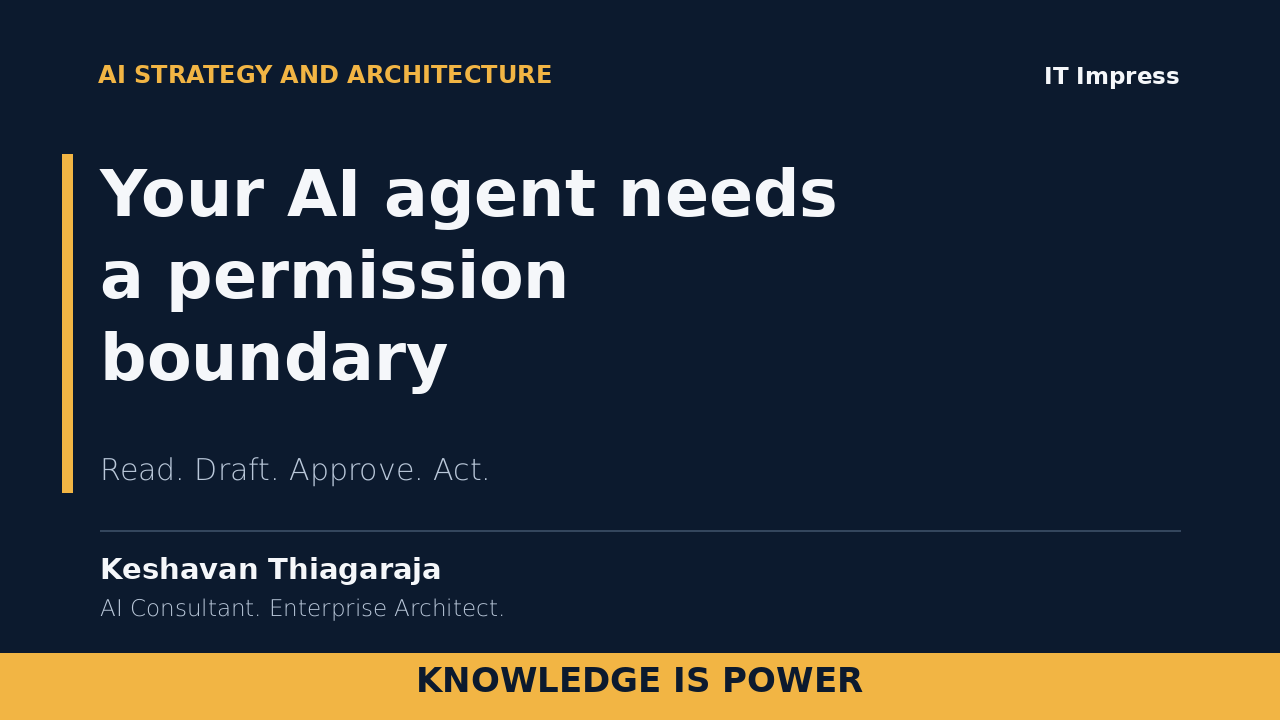
Reading is not writing. Drafting is not sending. Recommending is not committing. Design each boundary separately.
What CEOs and CTOs should do
Choose one workflow. Define what the agent may read, change and send. Give it only the access that workflow needs.
Put explicit approval before payments, deletions and other high-impact actions. Show the proposed action before asking someone to approve it.
Keep an audit trail. Test the failure path, including whether access can be revoked and the workflow stopped.
Start with a draft-only pilot. Expand autonomy only when measured results and tested controls justify it.
A polished answer is not evidence of a safe action. Responsible AI design connects useful capability with clear accountability.
Which action in your business should an AI agent always bring back for human approval?
Think mathematically. Engineer intelligently. Lead strategically. Build responsibly. Scale globally. Create real business value through artificial intelligence.
#AgenticAI #AIStrategy #EnterpriseArchitecture #ResponsibleAI #ITImpress